Ask Aptly in Slack what you can approve, get a cited answer, and approve, issue or revoke authority without leaving the conversation.


Aptly brings governed answers on decision rights into Slack, from the same Aptly Intelligence layer that powers Aptly Assistant in Microsoft Teams. People ask in plain language what they can approve and up to what limit, and get an answer drawn from your governed Aptly records, with a citation to the decision, the delegation, the limit and who granted it. When they choose to act, they can approve, issue or revoke authority in the same conversation.
Plain-language answers on decision rights
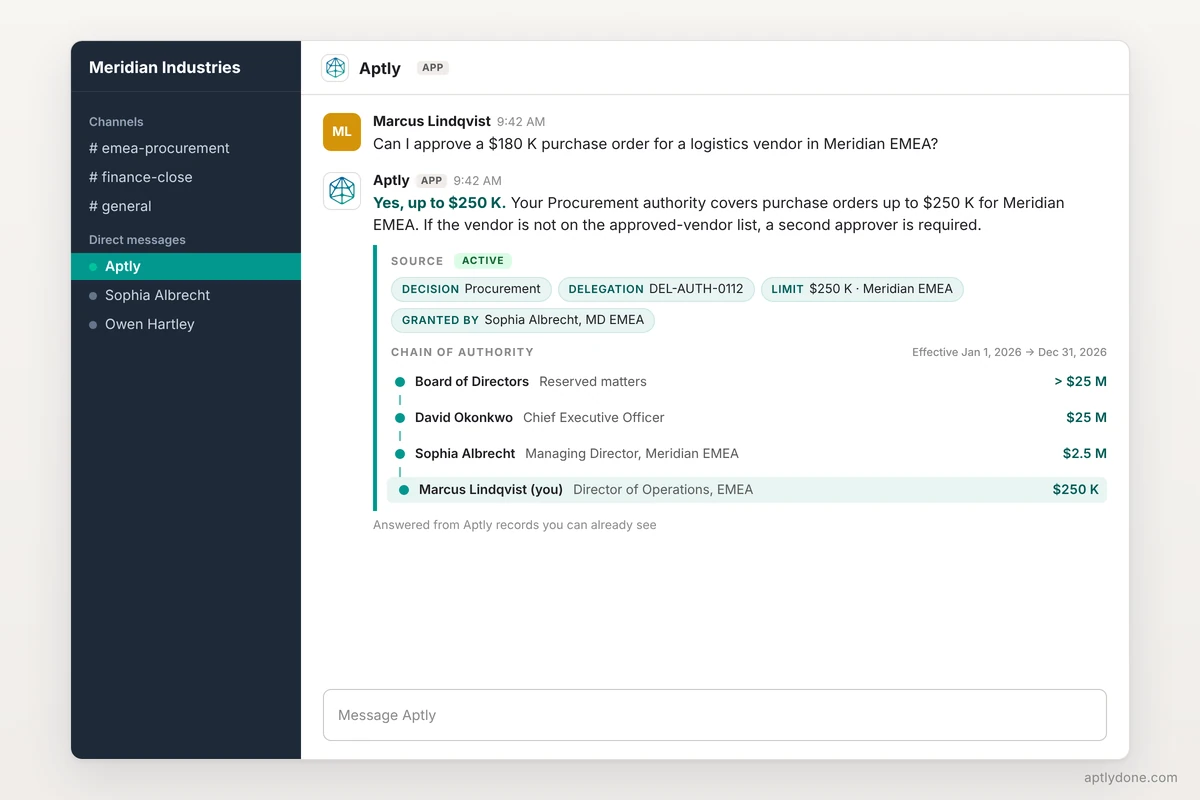
Ask whether you can approve a specific purchase order, contract or hire, in a direct message or a channel, and get a direct answer with the limit and any conditions.
A citation on every answer
Every answer shows the decision, the delegation, the limit and who granted it. Answers come only from your governed Aptly records, never from a general model's own knowledge.
Full chain of authority
Trace any authority back through each delegation to where it originated, and see which of your authorities are about to expire.
Notifications and alerts
Get notified in Slack when authority is issued, approved, revoked or nearing expiration. Alerts can go to specific channels or direct messages, and administrators choose which notifications and actions appear in Slack, and for which teams or roles.
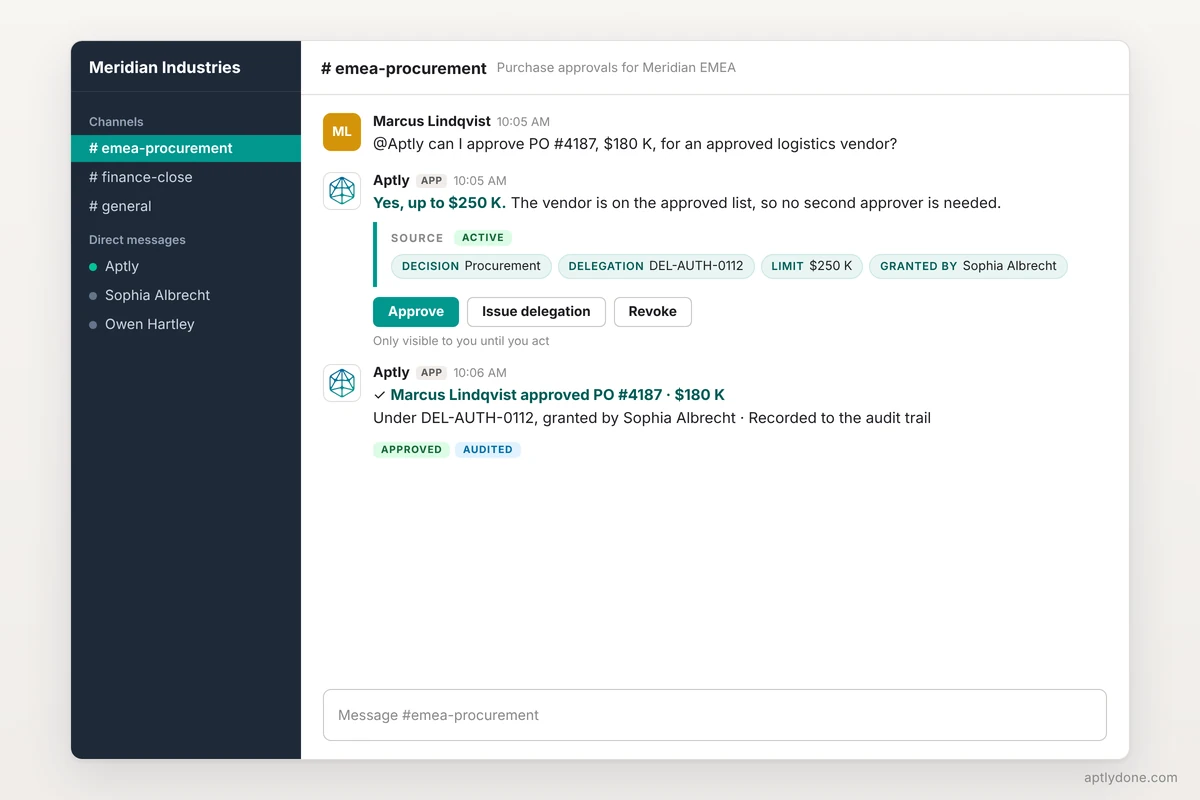
Approve, issue or revoke in the conversation
Act on authority without leaving Slack. Every action runs through the same authority check, so an out-of-authority action never executes, and each one is recorded to the audit trail.
Authority insights
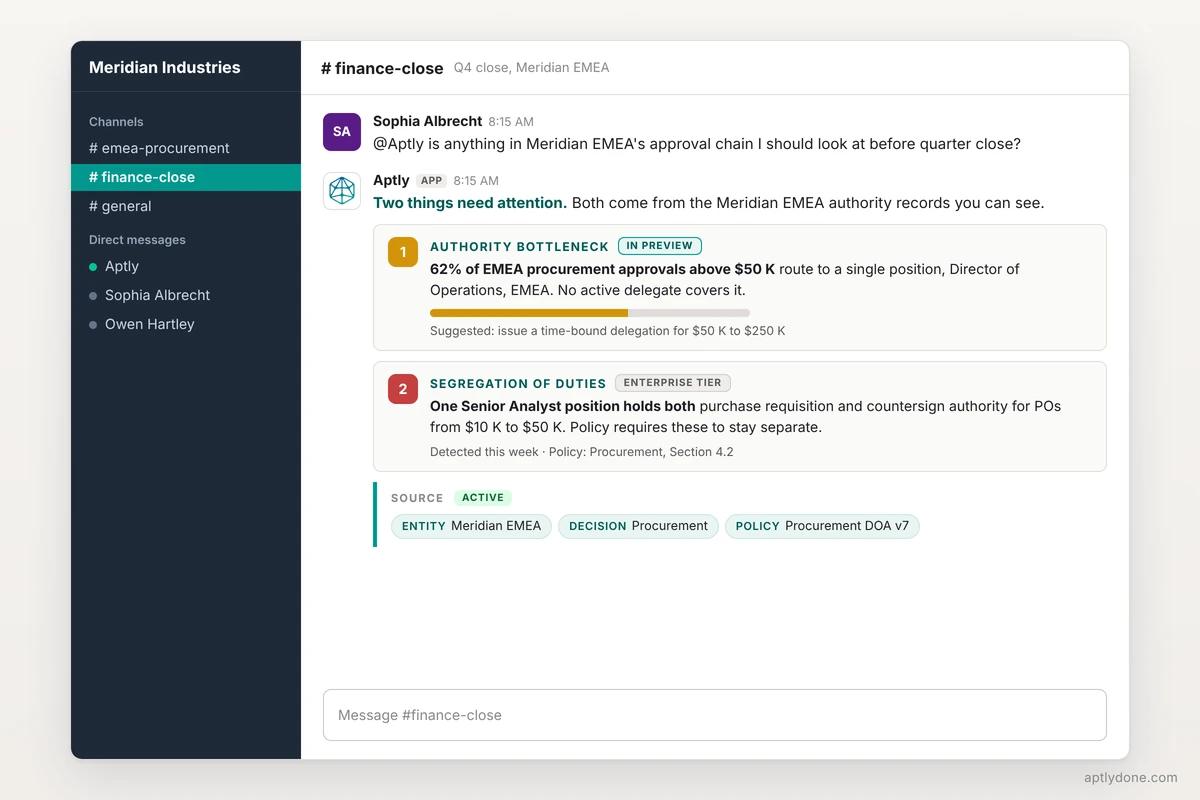
Ask where approvals are piling up or whether a position holds authorities that should stay separate. Authority bottleneck insight is in preview. Segregation-of-duties analysis is available in the Enterprise tier.
Teams that run on Slack get the same answer, in the same place they already work, with a citation they can audit. One governed record serves Slack, Teams and the web, so authority stays consistent wherever the question is asked.
Read more: Aptly Assistant brings decision rights into Microsoft Teams, for people and AI agents.
Aptly streamlines decision management and empowers teams to do more, within the applications they already use.